
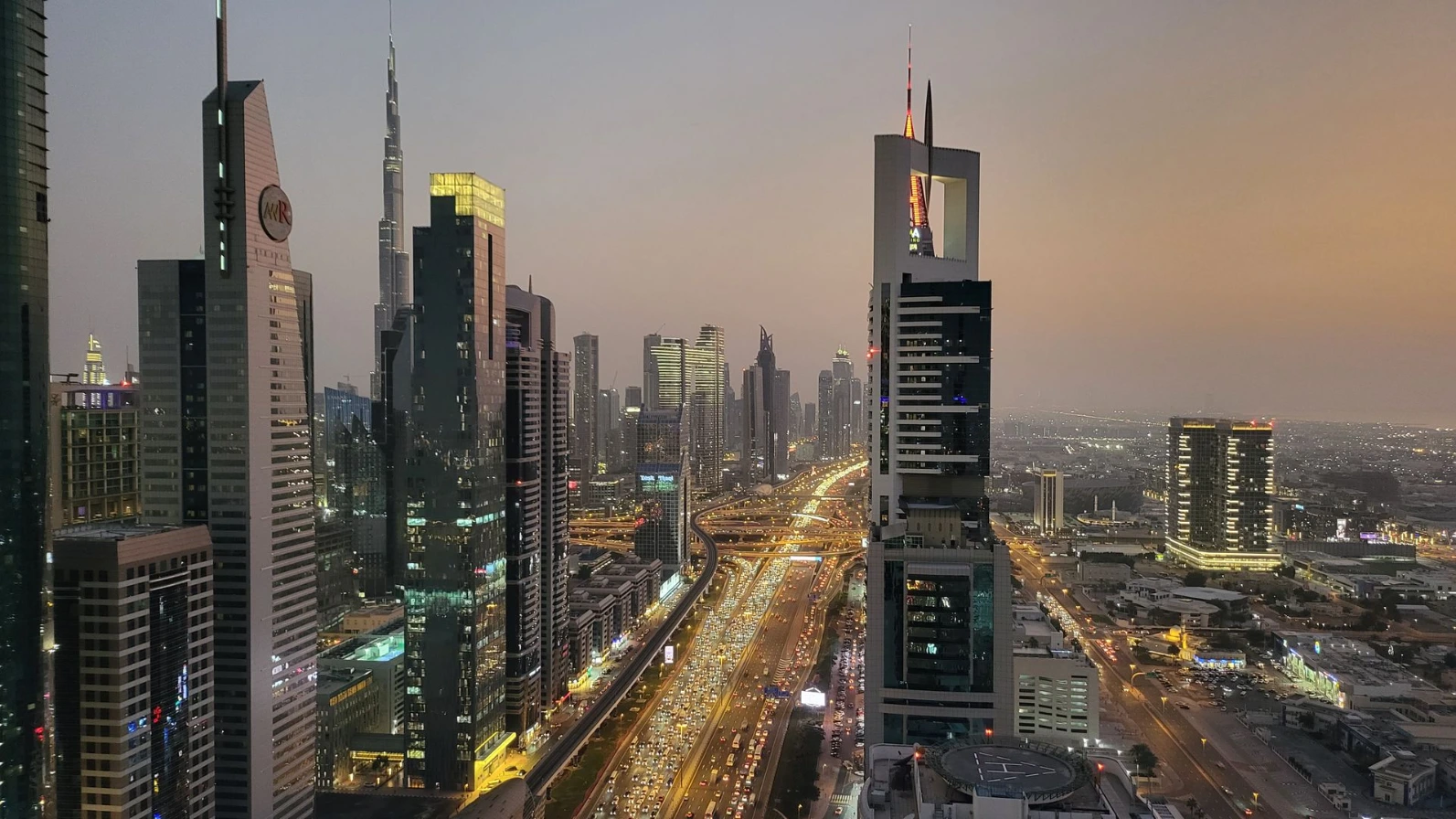
Between empty tables and concentrated capital in Dubai STATE-BACKED START-UP FINANCING IN THE EMIRATES The Emirates in a state of tension: In Abu Dhabi, life appears normal, while Dubai is feeling a certain restraint in tourism and the property sector. At the same time, the government continues to systematically expand its start-up strategy. Anyone seeking to understand the market must therefore not only look at short-term market reactions, but at the structures that Dubai is deliberately creating – and has already created. The geopolitical situation in the Middle East is currently causing uncertainty. What is decisive, however, is the actual situation on the ground. Discussions with chambers of commerce, embassies, and institutional stakeholders lead to a different conclusion than the public perception in Europe often suggests: the economic stability of the Emirates remains intact. There are no discernible trends of outward migration, nor can any structural distortions in the market be identified. In Abu Dhabi, life continues largely unchanged. Busy streets, functioning processes, no visible signs of nervousness. Dubai feels different. There, part of the demand is strikingly missing: restaurants are noticeably quieter, some hotels are closing for renovations, and a certain restraint is also evident in the property market. This is not a crisis – but it is also not “business as usual”. What is decisive is not the reaction of individual companies, but that of the system itself: Dubai is not reinventing itself; it is continuing, with consistency, to implement what had already been set in motion. START-UPS ARE NO LONGER A MARGINAL TOPIC This is particularly evident in the field of start-up financing. Anyone who was active in the Emirates five or six years ago will recall the prevailing scepticism. “Too abstract,” “not tangible” – that was a common refrain. Within a few years, this perception has changed fundamentally: Start-up business models are no longer supplementary, but a central component of economic development. The “D33” agenda is not merely a political vision, but an operational guideline, aimed at doubling economic output by 2033 and at building technology-driven companies in a targeted manner. Capital is now being deployed in a targeted way to support the establishment of new technologies. Platforms such as “Dubai Founders HQ” are a good example of this. They do not simply bring start-ups and investors together; they create clearly defined interfaces. This can also be observed beyond the Emirates. Events such as GITEX – a technology exhibition covering software, AI, blockchain and, in particular, start-up development – and its European offshoot, GITEX Europe in Berlin in June, illustrate how Dubai builds international networks and consolidates capital flows. EARLY-STAGE FINANCING IS BROADENING Further developments can be observed on the ground. In free zones such as Dubai Silicon Oasis, dedicated venture funds have emerged that deliberately finance very early stages (pre-seed) – an approach that was scarcely visible only a few years ago. At the same time, the system is becoming more demanding. Capital is no longer made available simply for “good ideas”. What matters is substance, an operational presence in the Emirates, and the ability to scale. At the same time, the system offers considerable flexibility to test new models – for example through so-called “sandboxes”, in which business models can be developed under real market conditions without being strictly bound by regulatory requirements from the outset. WHY IT IS WORTH LOOKING BEYOND THE SURFACE Dubai and the Emirates are currently often met in the media with scepticism and, at times, a certain degree of schadenfreude. This is not a balanced view, but is in part a reaction to the many influencers who openly mocked those “who stayed behind and still pay taxes”. Those who know the Emirates from experience tend to value the flexibility, speed, and creativity of government action. The current phase is acting as a market correction in some overheated segments, but it certainly does not mark the end of the “Dubai dream”. If anything, it is precisely now that the Emirates merit a closer look. DANIEL TEN BRINKE is President of the Federal Association of Emigration Consulting & Foreign Trade Promotion (“Bundesverband Auswandererberatung & Außenwirtschaftsförderung e.V.”) in Berlin. For more than a decade, he has been advising companies on investment and strategic expansion in and to the United Arab Emirates.